H20 : Fiches pédagogiques

H20 : Fiches pédagogiques

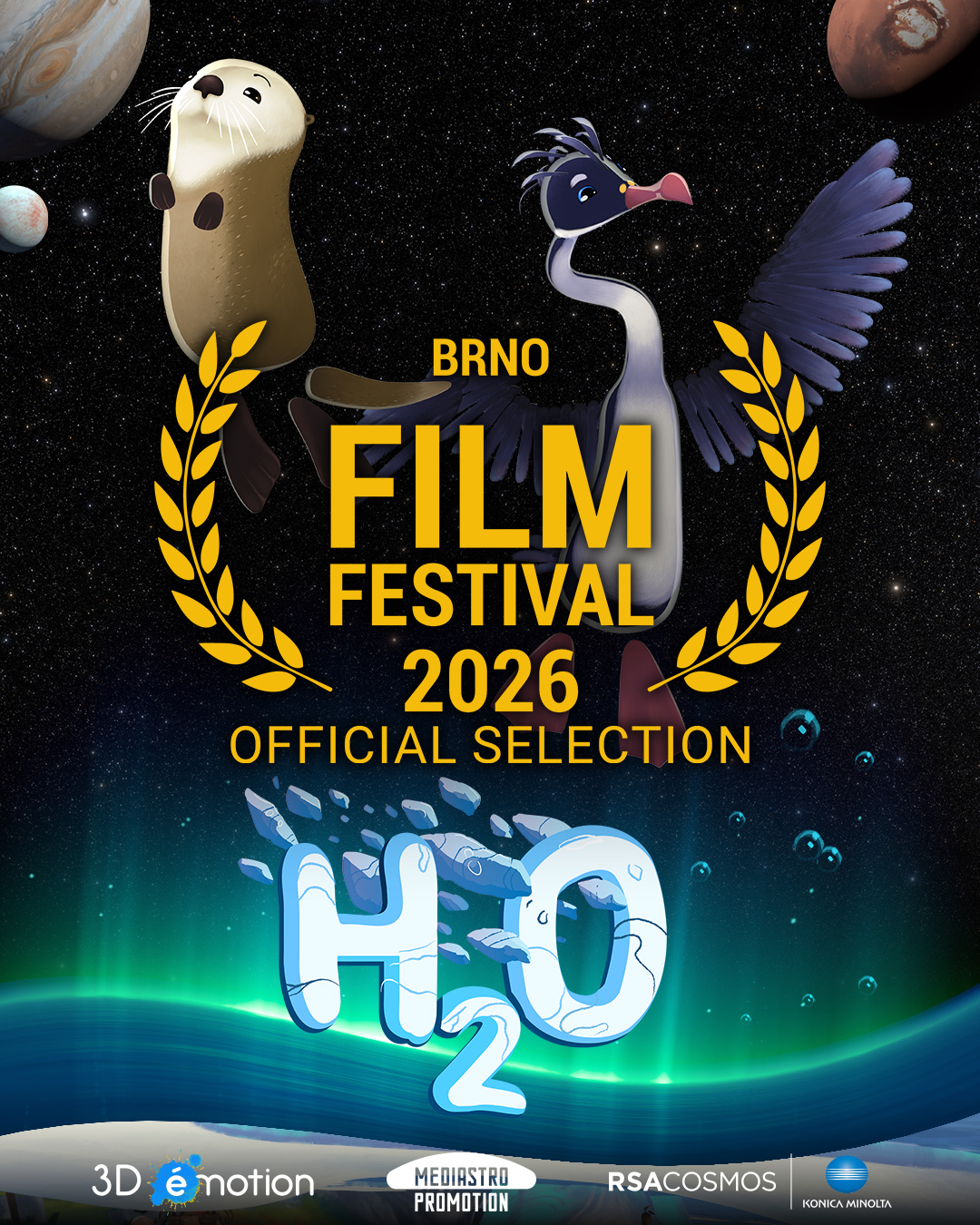
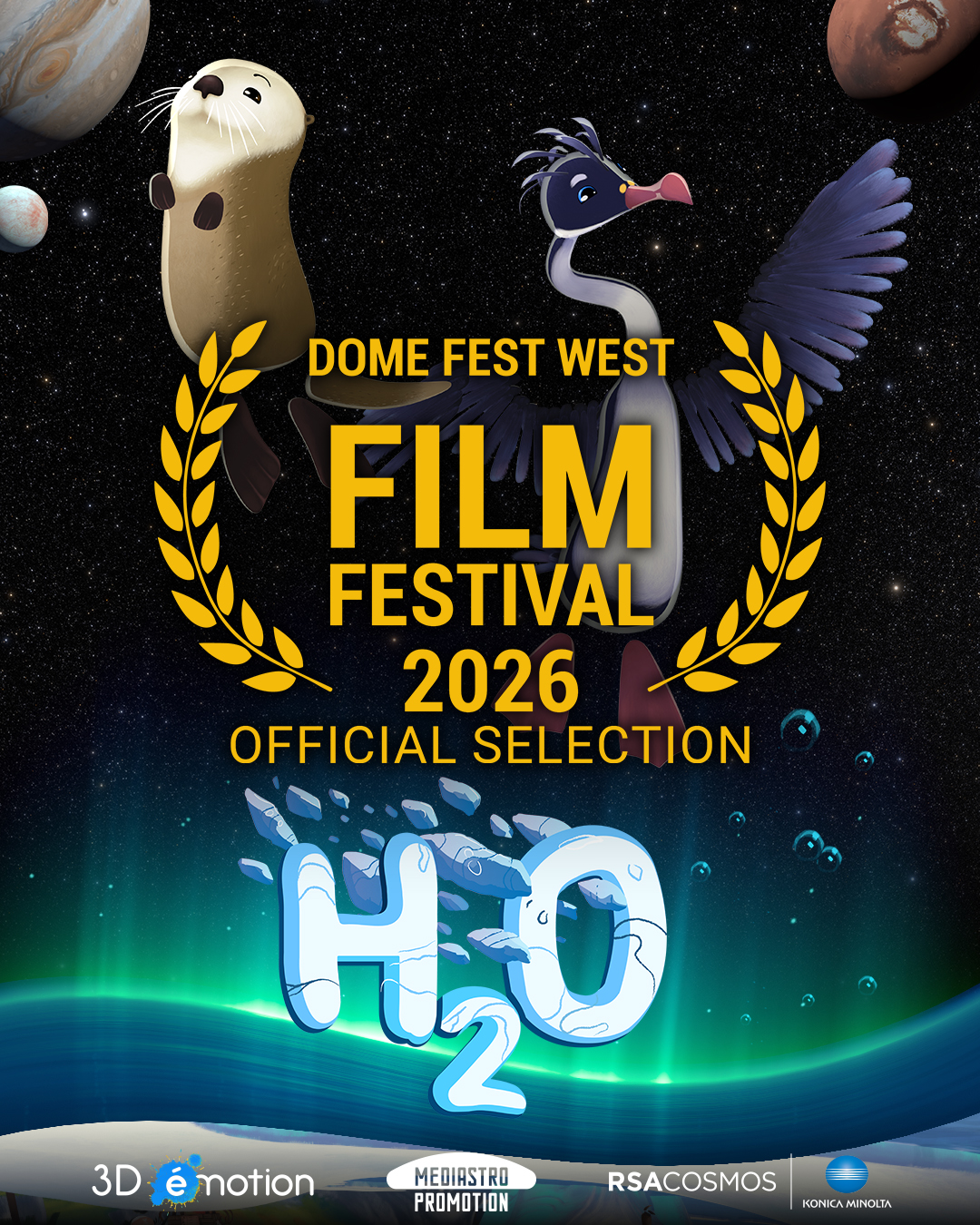
Notre dernière production immersive ne s’arrête pas sous le dôme !

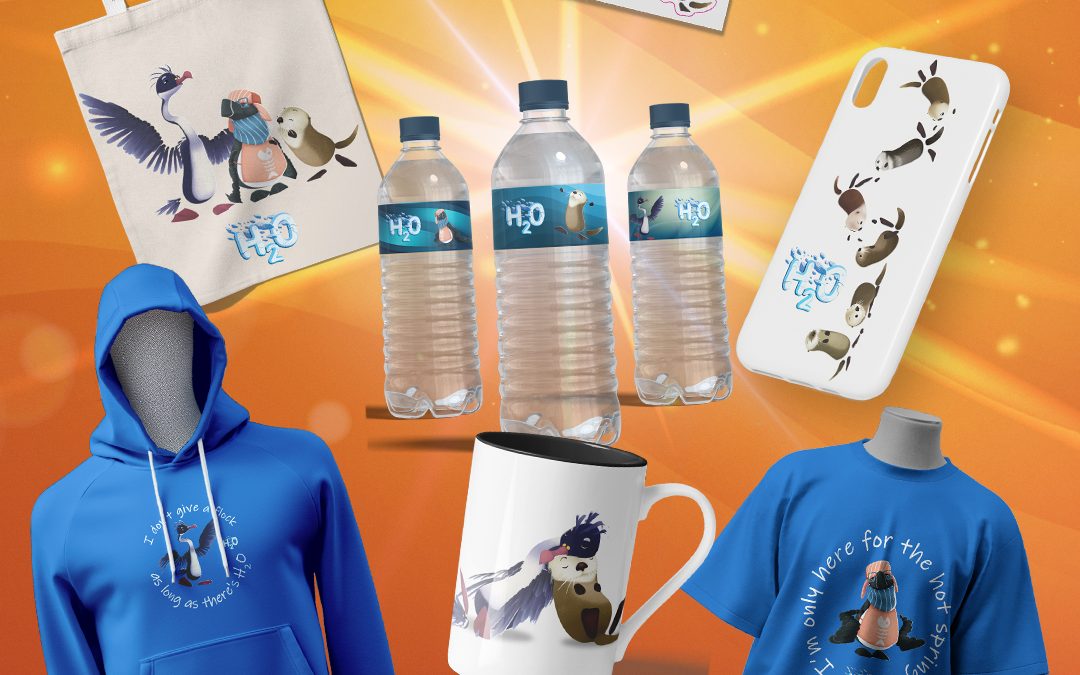
Pour accompagner la découverte du film H2O, nous mettons à disposition des fiches pédagogiques et activités spécialement conçues pour les enfants.

Ces ressources permettent d’approfondir, de manière ludique et adaptée, les thématiques abordées dans le film : le cycle de l’eau, les états de la matière,l’eau sur Terre… et ailleurs dans l’Univers etc.

Expériences simples, questions de compréhension, activités créatives… De quoi stimuler la curiosité scientifique et prolonger l’émerveillement après la séance.

Our latest immersive production doesn’t end under the dome!

To complement the H2O experience, we are providing educational worksheets and activities specially designed for children.

These resources offer a fun and age-appropriate way to dive deeper into the film’s themes: the water cycle, states of matter, and water on Earth… as well as elsewhere in the Universe.

From simple experiments and comprehension questions to creative activities—there’s everything needed to spark scientific curiosity and keep the wonder alive after the show.
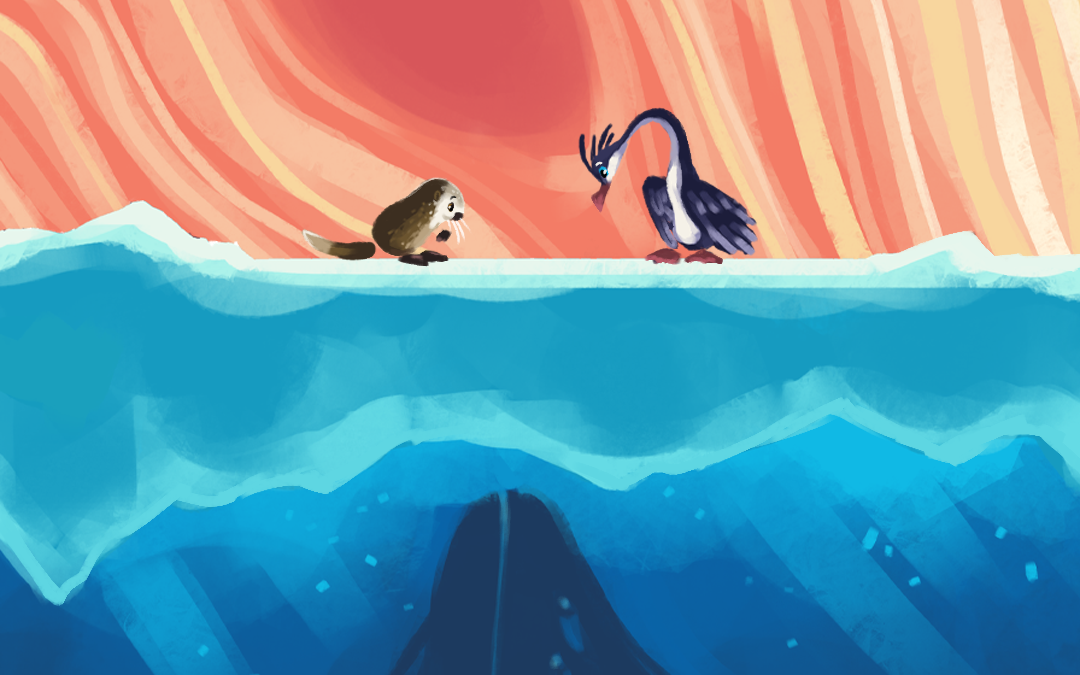
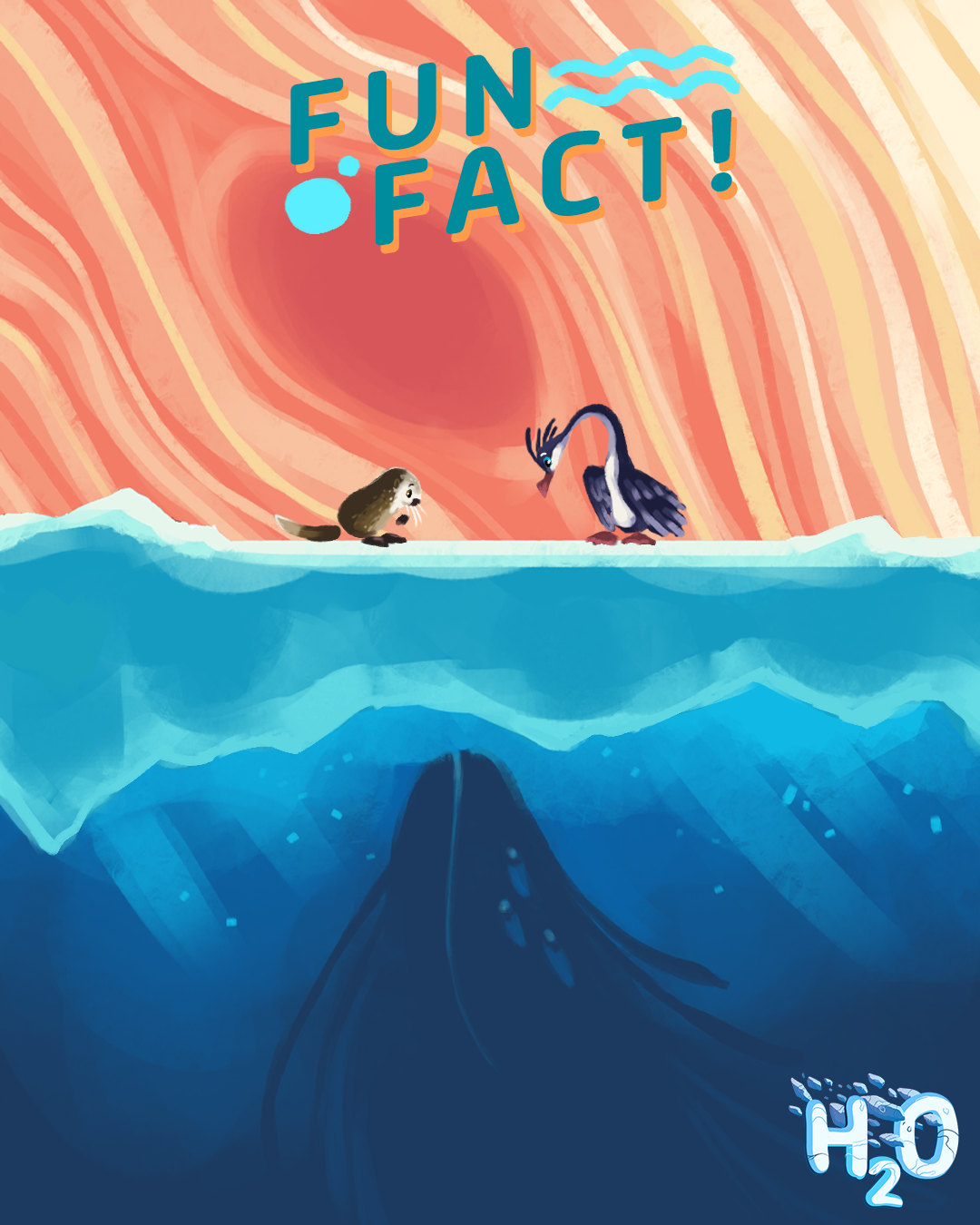
Fun fact ! Ébullition vs Évaporation : quelle différence ?

Fun fact ! Ébullition vs Évaporation : quelle différence ?

Le saviez-vous ?

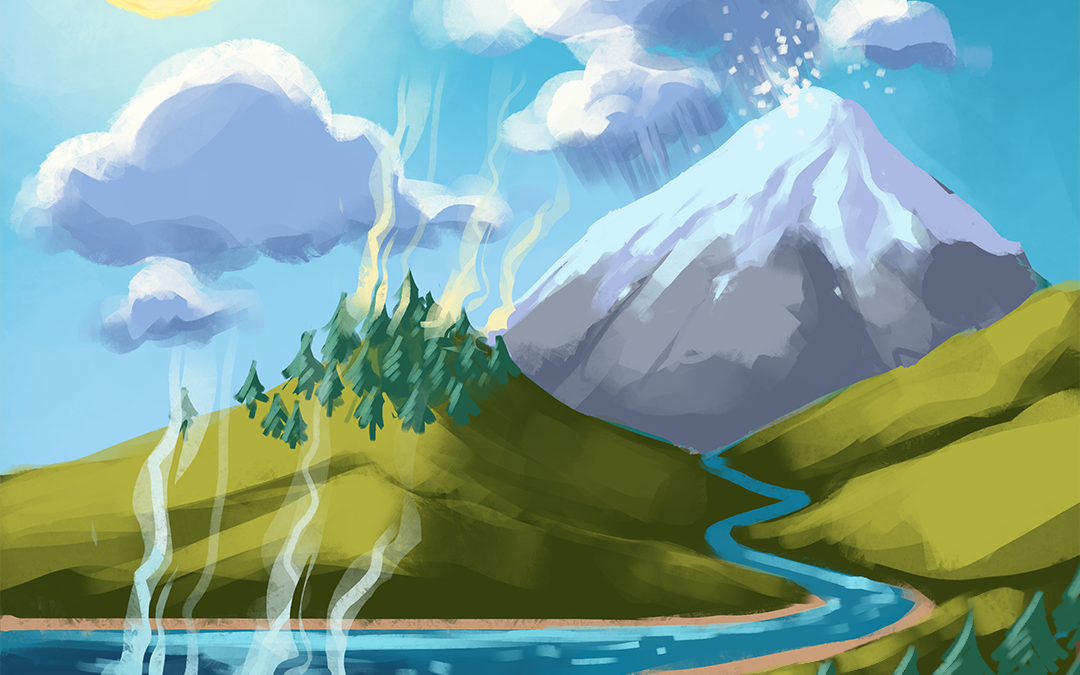
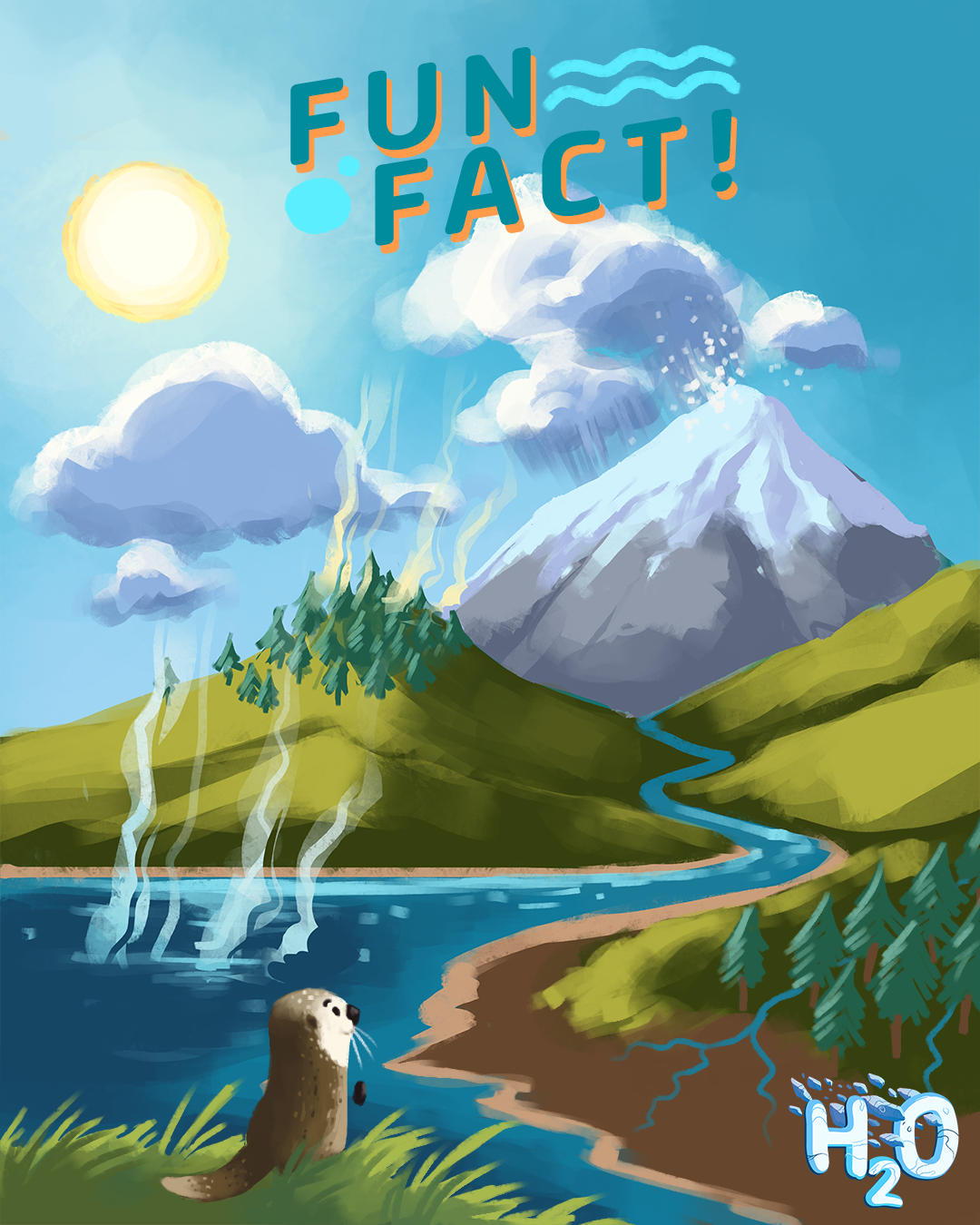
L’eau peut se changer en gaz de deux façons différentes :
– L’évaporation, un phénomène lent qui se produit à la surface de l’eau, même à température ambiante. C’est ce qui fait sécher votre linge, par exemple.
– L’ébullition, qui se produit à 100 °C (à pression normale), quand l’eau se transforme en vapeur, formant des bulles visibles.
Dans notre film H₂O, ces deux phénomènes sont expliqués de manière simple et ludique, pour mieux comprendre le cycle fascinant de l’eau.
Plongez dans cette aventure aquatique !

Did you know?

Water can become gas in 2 ways :
– By evaporating, a slow phenomenon that occurs on the water’s surface, even at room temperature. It dries your laundry out, for example.
– By boiling, at 100 °C (sea-level pressure), when water becomes steam and forms visible bubbles in the liquid.
In our film H2O, these two phenomenons are explained in a fun and simple manner, to better understand the fascinating cycle of water.
Dive into this underwater adventure!
H20 : Features

H20 : Features

H2O, notre tout dernier spectacle, a été conçu pour exploiter pleinement la puissance des technologies d’écrans géants immersifs de pointe : 60 images par seconde, résolution 8K native, 3D stéréoscopique et audio immersif 7.1.

H2O, our latest show, is built to fully harness the power of cutting-edge giant immersive screen technology with 60 fps visuals, native 8K resolution, stereoscopic 3D, and immersive 7.1 audio

Fun Fact ! La planète bleue… en surface seulement

Fun Fact ! La planète bleue… en surface seulement

Le saviez-vous ?

L’eau recouvre environ 71 % de la surface de la Terre, mais elle représente seulement 0,02 % de la masse totale de la planète.
Ainsi, cette robe bleue qui entoure la Terre est très fine… et précieuse !
Pour comprendre pourquoi l’eau semble si omniprésente, mais est si rare en réalité, découvrez notre film H₂O, pour en savoir plus sur le film H₂O.

Did you know?

Water covers approximately 71% of the Earth’s surface, but it represents only 0.02% of the planet’s total mass.
As a result, the blue cloak that surrounds our planet is extremely thin… and precious.
To understand why water appears so omnipresent yet is, in reality, so rare, discover our film H₂O, to learn more about the H₂O film
Hazelnuts, in search of the perfect planet

Hazelnuts, in search of the perfect planet

Hazelnuts, in search of the perfect planet

Crunchy, sweet and delicious, hazelnuts are an ideal meal for any self-respecting squirrel. But there’s nothing to stop you dreaming even bigger. Super hazelnuts, for example, tens of thousands of them up in the sky. Who knows, maybe they’ll even grow on the moon?

Hazelnuts tells the story of Nino and Lili, two squirrels who are so fond of hazelnuts that one day they decide to go into space to see if there are any better ones. As you may have gathered, this story raises a broader question. Will we find better on other planets? Or to put it another way: is the grass greener elsewhere?

08_Shadow
Hazelnuts is the second co-production between Mediastro Promotion and 3D émotion, following GranPa and Zoé : Mission Light. It’s a project that’s been close to our hearts for a long time, and one that we’re proud to present to planetariums and their audiences.

Master Owl, perched in a tree, watched the squirrels with gloomy eyes.

These are the characters in our story!

Léon

09_Shadow

We’d like to say that Léon is the voice of wisdom, but that would be true if he were less ironic. Léon is a teasing owl who has no problem laughing at the failure of two poor squirrels. But don’t be fooled. Beneath his grumpy exterior, Léon is a patient and attentive owl. So he’s ready to welcome two rascals into his home to teach them everything he knows – and he knows a lot. This unexpected encounter is the start of a beautiful friendship.

Nino et Lili

07_Shadow_miroir

Nino and Lili are two young squirrels, brother and sister, who spend their time playing and nibbling nuts. It’s a carefree life full of play, at least until the day they decide to go and look for nuts in space. From then on, their excessive greed turns into a thirst for understanding and discovering what’s on the Moon and the other planets. Here are two characters that children will be able to identify with. Chirpy, intrepid and curious characters.

Teaching children about the living conditions on each planet

planètes spectacle Noisettes

Teaching children about the living conditions on each planetWhat motivated Hazelnuts d’abord was the desire to speak to a younger audience than we are used to. Hazelnuts is aimed at 5-year-olds. Naturally, we had to adapt everything to this audience, starting with the subject.

Here we’re talking about the planets of the solar system, but from a different angle to that usually adopted in planetariums. No order of planets to remember, no period of revolution, just one thing: their climatic and physical conditions.

We’ve chosen this theme primarily because it allows us to bring astronomy down to earth in a way that children can easily understand. Showing that Mars is cold, Venus is hot and Jupiter has no soil is a gentle way of introducing children to astronomy, because every child knows what cold, hot and soil are. It’s also because it effectively serves an overall message about the film’s real subject: life.

Life, the subject of astronomy

canopée Noisettes

To talk about the living conditions on each planet is to talk about life itself. It’s about us, about the Earth, and about what is precious about it.

With Hazelnuts, we wanted to show that the question of life is not just a matter for biology, but also for astronomy. At the top of this question are important concepts such as the habitable zone, the atmosphere, the magnetosphere and atmospheric pressure. A set of criteria that are essential to life and that, to be properly understood, require a focus on space.

Indeed, it is by observing planets burnt by the sun that we understand that we are at a good distance from it. It is by seeing the effect of enormous atmospheric pressure that we understand the influence of our own. And it’s the power of the solar wind that reveals the effectiveness of the shield that protects us from it. In short, the hostility of other planets reveals the comfort of our own.

An illustrative style and borrowings from puppet theatre

Noisettes logis Léon

For the five-year-olds, we’ve opted for a style akin to illustration. Hand-painted textures that reveal the brushstrokes, warm, soothing colours and round character designs. Hazelnuts is a visually gentle show that leaves plenty of room for artistic expression. We’ve also borrowed from the special genre of puppet shows, a formula that’s close to the audience and cultivates an interesting form of interactivity when it comes to children. We wanted to apply this recipe to the planetarium film, so as to welcome young people with something close to what they already know.

Les trois personnages de Noisettes

The adventures we’ve devised and the characters we’ve written are very much based on theatre and storytelling. There are rehearsal gags that play on children’s expectations, including a hide-and-seek scene that invites them to react to warn a character. A motherly, complicit narrator reminiscent of public readings. And sets designed like little theatre scenes.

Hazelnuts is as intimate as a fairytale reading and as cheeky as a puppet show. What we wanted was to take children on a poetic adventure, while inviting them to laugh. It’s a particular mix that we wanted to reproduce in our show. But far from just involving the narrative, the Hazelnuts theatre approach also involves animating our characters.

A new animation method

Noisettes tournage capture

As we explained on our page dedicated to the show, Hazelnuts is based on a different kind of animation from our other films. The idea was to produce an animation that would be quick to produce, but that would also have a certain cachet and clearly demonstrate its particularity: that of reproducing the gesture of the puppeteer.

Let’s face it, this is handmade 3D animation with a unique rendering. Our two squirrels have no legs or arms, Leon is shaped like a potato, and yet they all move as if they were living stuffed animals. In fact, that’s how we could describe our method. We animated our characters as children would play with cuddly toys.

Let’s explain.

Noisettes séance capture de mouvement

Instead of using a motion capture suit as usual, we used the Oculus peripherals – headset and controllers.

The controllers were diverted from their original purpose to become capture tools. In fact, we linked them (digitally) to our characters’ bodies. So when we moved the right joystick, it was our character’s head that followed, and when we moved the left, it was his backside.

As for the virtual reality headset, it allowed us to be immersed in the 3D scene. You have to imagine it like this: we were in the set, in the middle of the forest with one of our characters in our hands, like a puppeteer immersed in the fictional world of his puppet.

The main movements (head, body, movement) were captured in this way, as we moved around the scene and played with our characters, all in real time. And the finer movements (legs, eyes, ears, tail, expressions) were obtained afterwards using our classic computer techniques.

Initially, what interested us about this technique was the comfort of capture. Being able to hold our characters in your hands and gauge their movements immediately in the background is priceless. It’s ideal for an animator.

Then, of course, what motivated us was the animation itself. We wanted to create a movement that let you guess what the animator was doing. A movement that reproduced the restlessness of the puppet (perfect for two restless squirrels) but that still gave us a certain amount of control over each movement, something that only 3D animation allows. The result is unique. A bouncing movement that’s a little unreal, but very expressive.

Character design: round and soft as cuddly toys

Obviously, we owe this result not only to the capture, but also to the designs of our characters. The two are linked.

The shapes of Léon, Nino and Lili have been designed to produce certain movements. For example: the very slender bodies of our two squirrels stretch like elastic bands and create a fun malleable gesture. Or Léon’s thick body, supported by his little wings when he flies, creates a slightly clumsy movement that suits the character well.

recherches_graphiques_persos

Designs adapted to animation, but not only. By giving our characters simple geometric shapes, we wanted to do two things:

  • Firstly, to respect the illustrative approach of the film. And we think we’ve succeeded. After all, we’re sometimes surprised ourselves at the extent to which certain shots in the film look like illustrations, when in fact they are 3D!
  • Secondly, by adopting a cuddly toy look, ideal for attracting 5 year olds. Our squirrels may be mischievous and our owls grumpy, but we still want to cuddle them. Their pudgy, soft appearance is just the thing. Our real wish? That the children come away from the session wanting to hug Léon.

Data sheet

Duration: 25 min

Format: Fisheye

Versions :

  • 4k
  • 6k
  • 8k
  • 4k relief
  • 6k relief
  • 8k relief

TargetAudience: à partir de 5 ans

Language : en version anglaise et française

Exclusive Distributor : RSA Cosmos

GranPa & Zoé : Mission Light, our latest production

GranPa & Zoé : Mission Light, our latest production

GranPa et Zoé: Mission Light, our latest project

Three years after the release of Lucia, here’s our latest project: Granpa & Zoé Mission Light!

Electromagnetism and space travel

Seq140_Shot081

It’s the story of an old koala bear and a young dingo who are brought together to save the light. Yes, when you put it like that, the concept may sound far-fetched. But it hides a film in which we’ve put everything we love: scientific content, tongue-in-cheek humour, endearing characters, spaceships and nods to our favourite films.

How did we manage to make a film that looks so much like us? The answer is simple: we didn’t commission it, we created it entirely ourselves. We are both directors and co-producers. It’s a first for us. And let’s be frank: we’re proud of the result. So we’re off to a great start, building a catalogue that we hope will grow over the years.

Let’s introduce ourselves

A film is first and foremost a cast of characters that we like to follow on their adventures. We’d like to introduce…

GranPa

Gdpa

A retired scientist, GranPa spends his old age fishing, stuffing his face with eucalyptus sticks and talking for hours about the mysteries of the universe. Yes, he’s passionate about astrophysics – what better way to talk about light? – but he’s also very impulsive, and a bit of a scatterbrain. Two traits that don’t mix well, as you might guess. His passionate impulses often get him into uncomfortable situations. But it’s always with a dry sense of humour that he gets out of them. GrandPa may repeat that he wants to take it easy on his ranch, but he’s still very enthusiastic when adventure knocks on his door. Proof that he’s not that keen on retirement.

Zoé

Zoe

Without Zoé, GranPa’s retirement would probably be very boring. She regularly comes to visit him at his ranch. They share a passion for science. Zoé is a curious girl. She has a thirst for understanding and finds the answers she needs in GranPa. But her youthful energy should not be mistaken for naivety or recklessness. Quite the opposite. In perilous situations, Zoé is more measured than GranPa, and she reproduces brilliantly what she learns from him. When GranPa’s absent-mindedness puts the duo in danger, Zoé’s reflexes make up for it.

Bogbog

Bogbog

Meet Bogbob. A teenage alien who has found no better occupation than to harm our planet. An old enemy of GranPa’s, we can imagine past confrontations, desires for revenge never satisfied, a long list of thwarted plans. These two will never love each other. Perhaps it’s a generational mismatch, because at his age Bogbog is in the throes of an adolescent crisis. He spends his time geekering and talking back to his parents (too lax in our opinion). All this makes Bogbog a totally ungrateful character, with no empathy for living species. He carries out his attacks from his bedroom, on his keyboard. But there’s nothing Machiavellian about Bogbog – he’s not intelligent enough to be, he just wants to get on with the game. Opposing his plans is like switching off your console in the middle of a game. You’re sure to piss him off even more.

PS: don’t take this as a serious dig at gamers, because at 3D emotions, we’re gamers too. And not just a little! With Bogbog, we’ve made a bit of a caricature of ourselves.

Light, action!

Seq140_Shot081

Light is essential in astronomy, but it is rarely the subject of educational films.

We could not observe the stars without it, nor understand them without the information it contains. It gives us the composition, distance and movements of the stars. It is therefore the raw material of astronomers.

This is something that the public is perhaps unaware of, or does not fully appreciate. Nor do they imagine that the study of light could be the source of major discoveries.

But that’s not the whole story. The interesting thing about light is that it combines many things. Understanding its nature allows us to understand, among other things, colours, why the sun heats and illuminates us, and what infrared and ultraviolet light are.

Light is a surprising subject, because it allows us to make the connection between things we thought were foreign to each other. For example, it’s always surprising to learn that microwaves and light are the same thing, or that our eyes only perceive part of light, in the form of colours, and that a large part remains invisible to us.

It’s this astonishment that we wanted to convey.

Our approach to popularisation

Seq070_Shot130

Popularising science in a documentary is one thing – you can talk straight about it. In a story, it’s quite another. The scientific act must have a raison d’être.

All the twists and turns must naturally revolve around the subject. Starting with the trigger for the adventure. Light is both the goal of the characters, who are trying to save it, and the means to achieve it, because they need to understand it in order to move forward.

We conceived Granpa & Zoé as a two-stage learning experience. The beginning calmly introduces the important scientific concepts. Then the adventure gives them the opportunity to put them into practice.
The space voyage and the final tests serve as a reminder of what has been said, but in the form of phenomena to be understood and puzzles to be solved.

The biggest challenge, however, was to keep it fun and educational at the same time. How, for example, do you tackle the concepts of the geometry of light in a way that is still enjoyable for the audience? The solution lay in the writing and directing: science, yes, but motivated by pleasant narrative challenges, and with that, endearing characters, visual gags, good words and, above all, rhythm!

Data sheet

Duration: 28 min

Format : Fisheye

Versions :

  • 4k
  • 6k
  • 8k
  • 4k relief
  • 6k relief
  • 8k relief

TargetAudience: 7-12 ans

Language: en version anglaise et française

Exclusive Distributor : RSA Cosmos

Résumé de la politique de confidentialité

Ce site utilise des cookies afin que nous puissions vous fournir la meilleure expérience utilisateur possible. Les informations sur les cookies sont stockées dans votre navigateur et remplissent des fonctions telles que vous reconnaître lorsque vous revenez sur notre site Web et aider notre équipe à comprendre les sections du site que vous trouvez les plus intéressantes et utiles.